
Some of the easiest food to grow starts in your kitchen bin. With nothing more than a glass of water and a sunny windowsill, you can regrow green onions, leafy greens, and fresh herbs from the scraps you would normally throw away. It feels like magic the first time, and it is a brilliant, no-risk way to start growing.
Let us be honest, though: not every scrap regrows into something worth eating. This guide sticks to the ones that genuinely work.
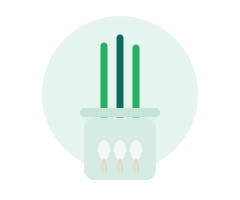
The basic setup (works for almost everything)
- Keep the root end or the base of the vegetable, roughly 3 to 5 cm.
- Stand it root-down in a glass or jar with just enough water to cover the roots, not the whole piece.
- Put it on your brightest windowsill.
- Change the water every 2 to 3 days so it stays clear. Cloudy water is the number one reason scraps rot instead of grow.
- Once you see new roots, move it to a small pot of soil for harvests that keep coming.
The fastest win: green onions
Green onions (spring onions) are the perfect first regrow because you see results in a day.
- Keep the white root ends about 3 cm long.
- Stand them in a glass with a little water on a sunny sill.
- New green tops start pushing up within 24 to 48 hours.
You can keep snipping the green tops for a couple of weeks in water. For months of harvests, pot them in soil once they take off.
Leafy bases: lettuce, celery, bok choy
Do not compost the base you cut off a romaine heart, a celery bunch, or a head of bok choy. Sit the base in a shallow dish with about a centimetre of water, cut side up, and small new leaves grow from the centre.
These give you a genuine “cut and come again” harvest for a few weeks. They will not regrow a whole new head, but you will get handfuls of fresh leaves before the base tires out. Move them to soil for the best results.
Herbs: mint, basil, cilantro and more
This is where scraps turn into real, lasting plants. Soft-stemmed herbs root from cuttings incredibly easily.
- Take a stem about 10 cm long and strip the lower leaves.
- Stand it in water on a windowsill, leaves above the surface.
- Roots appear in about a week, then pot it up.
Mint and basil are the most beginner-proof of all. In fact, growing mint from a cutting is so reliable it is worth starting a couple at once. Cilantro (coriander) and parsley work the same way. Once rooted and potted, a single herb cutting can keep producing for months.
What does not really work (so you do not waste time)
A few viral “regrow” ideas look great in videos but rarely give you food worth eating:
- Carrot, beet and radish tops regrow leafy greens, which are edible, but they never form a new root vegetable.
- Onion, garlic and potato can grow into new plants if you plant them in soil, but they will not regenerate a new bulb in a glass of water.
- Avocado pits can sprout a lovely houseplant, but fruit is years away and unlikely indoors.
None of these are wrong to try for fun. Just know they are novelties, not a food supply.
From scraps to a real windowsill garden
Regrowing scraps is the perfect confidence builder. Once you have watched roots appear in a glass, potting up a real plant feels easy. From there, fast growers like microgreens and basil are natural next steps. For the full picture, see our complete beginner’s guide to growing food at home.
Want help turning that first sprout into a plant that lasts? UrbanLeaf gives you one simple daily task for whatever you are growing, with weather-smart watering advice so beginners actually keep their plants alive. Free on iPhone. 🌱