
No balcony and no backyard does not mean no garden. The one space almost every home has going spare is the staircase: a run of sturdy, part-sunlit steps that usually holds nothing but dust. With plants chosen for your light and a safe layout, an indoor staircase garden turns that dead space into fresh herbs and greens you walk past every single day.
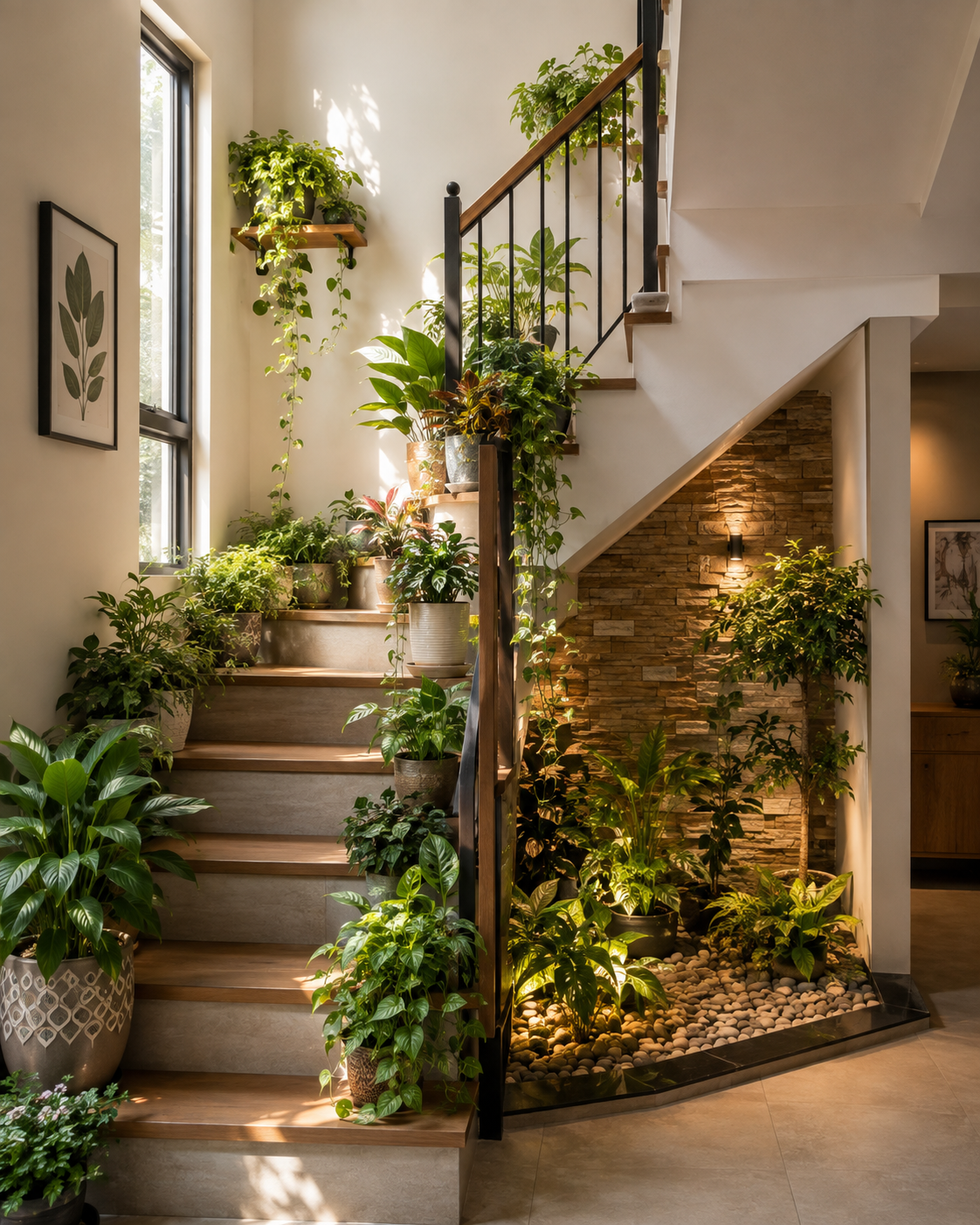
Why a staircase is a surprisingly good place to grow
- It is free vertical space. You are not giving up a room or a balcony. The steps are already there.
- It comes with built-in tiers. Each step is a natural shelf, so plants sit at different heights without any staging.
- It is often near light. Most stairs run past a landing window or a wall of glass, which is exactly what small edibles want.
- You pass it every day. A garden on your daily path is a garden you actually notice, water, and harvest. Out of sight is out of mind.
Step 1: Check your staircase light (do this first)
Light is the one thing that decides what will grow, so measure it before you buy a single pot. You do not need a meter. Do the shadow test around midday on a bright day: hold your hand about 30 cm above a step and look at the shadow.
- Sharp, dark shadow → bright light. Usually a landing right next to a window. Your best growing spot.
- Soft, fuzzy shadow → medium light. A few steps away from the window. Great for most herbs and greens.
- Almost no shadow → low light. Interior steps far from any window. Only the toughest plants, or add a grow light.
Most staircases have all three: brightest at the landing window, dimmest on the lowest interior steps. That is good news. It means you can place plants on the step that matches each one, instead of forcing everything into one spot.
Step 2: Pick plants for your light
Now match plants to the buckets from Step 1. This is the whole secret to a staircase garden that lives instead of limps along.
Bright landing (right by a window)
Put your sun-lovers on the sunniest step or landing:
- Tulsi (holy basil): wants good light and rewards you with fragrant leaves for tea.
- Curry leaf (kadi patta): a small pot on a bright landing does nicely.
- Lettuce and other salad greens: happy in a railing planter that catches the window.
- Coriander: best in bright, cooler spots.
Medium indirect light (a few steps from the window)
The sweet spot for most edibles:
- Mint: thrives in partial shade and trails over the step edge. A perfect staircase plant. See our full guide to growing mint.
- Spinach, methi (fenugreek) and amaranth (chaulai): fast leafy greens that cope with softer light.
- Microgreens: shallow trays, ready in days, need only a little light. One tray per step looks great.
- Spring onions: regrow endlessly from kitchen scraps, as in our regrow-from-scraps guide.
Low or dark steps (interior, far from a window)
Be honest here. Most plants will sulk. Stick to the survivors, or add light:
- Mint and ajwain (Indian borage): the toughest edibles for dim corners.
- Microgreens under a small clip-on LED grow light on a timer.
- Pothos (money plant): not edible, but the classic hardy trailer if you just want greenery on the darkest steps.
Step 3: Set it up safely (the golden rule)
A staircase is a walkway first and a garden second. Get this wrong and it becomes a hazard.
- Never block the path or the handrail. Keep pots on the wall side of wide steps, or off the steps entirely on wall-mounted shelves and railing planters. Leave a clear width to walk and always keep the handrail reachable.
- No water on the steps. A wet step is a slip risk. Use pots with saucers, water them at a sink, or line them up on a waterproof tray. Never let water run down the stairs.
- Keep pots stable and light. Choose small, lightweight pots that cannot be kicked or knocked down the stairs. A tiered plant stand on the landing is safer than loose pots on open treads.
- Go vertical where you can. Wall shelves, hanging pots, and railing planters get plants off the walking surface and closer to the light.
Step 4: A simple care rhythm
- Water by feel, not by schedule. Push a finger about 3 cm into the soil. Dry means water at the base until a little drains out; damp means wait. Indoor pots dry slowly, so overwatering is the usual killer.
- Rotate pots weekly. Plants lean toward the window. A quarter turn each week keeps them even and bushy.
- Feed lightly once a month. A little diluted organic feed keeps leafy greens and herbs productive.
Common staircase-garden mistakes
- Choosing plants before checking light → the number one reason staircase gardens fail. Light first, always.
- Crowding the walking path → keep it clear and safe, every time.
- Water pooling on steps → saucers and trays, no exceptions.
- Top-heavy pots on open treads → use a stand or the wall side so nothing tumbles.
- Expecting fruit in low light → grow leaves, not tomatoes, unless your landing is very bright.
New to all of this? Start with our complete beginner’s guide to growing food at home, then come back and fill your stairs one step at a time.
Not sure what your staircase plant needs today? UrbanLeaf gives each plant one simple daily task, including weather-smart watering based on your local forecast, so a beginner can actually keep a staircase garden alive. Start with one pot on one bright step, and grow from there. 🪴